Teaching
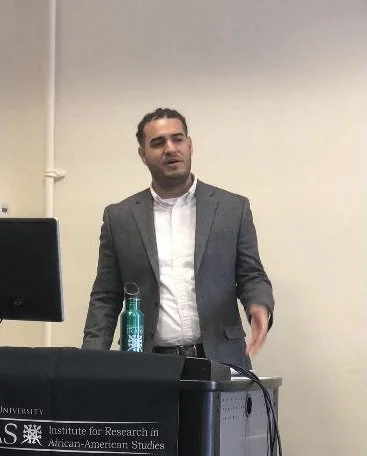
I have been an educator for two decades. In 2007, I designed and taught my first class: a media literacy course for Bronx high school students in a summer program at Lehman College (CUNY). I developed the course in response to my students’ desires to understand how their home borough was represented across film, television, and video games. Students paired their analysis of films, from The Warriors (1979) to Rumble in The Bronx (1995), with library research about Bronx history and a collective montage of photos and descriptions they wrote about their neighborhoods. Their comparisons yielded thoughtful discussions about why and for whom the recurring media (mis)representations were crafted.
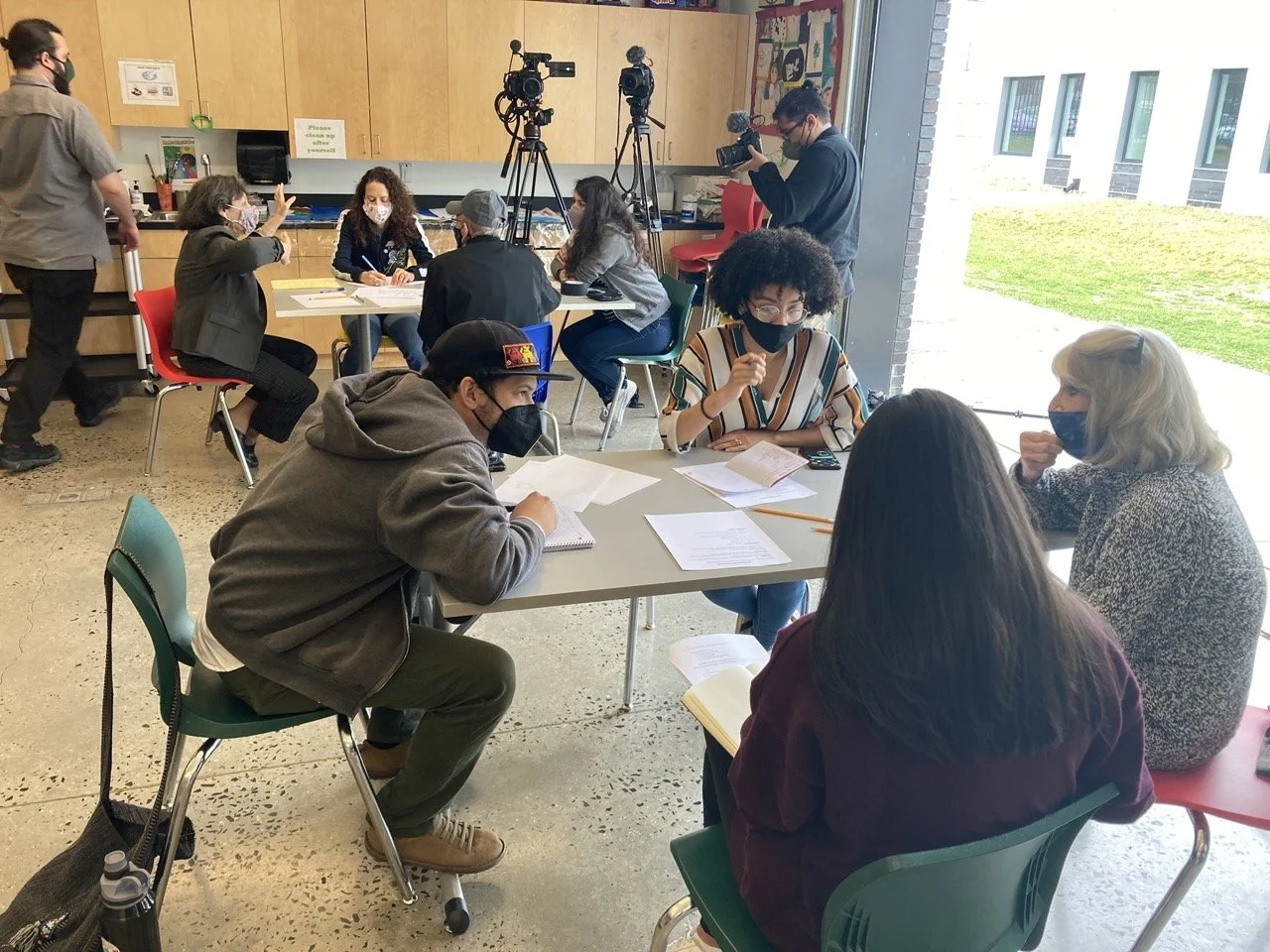
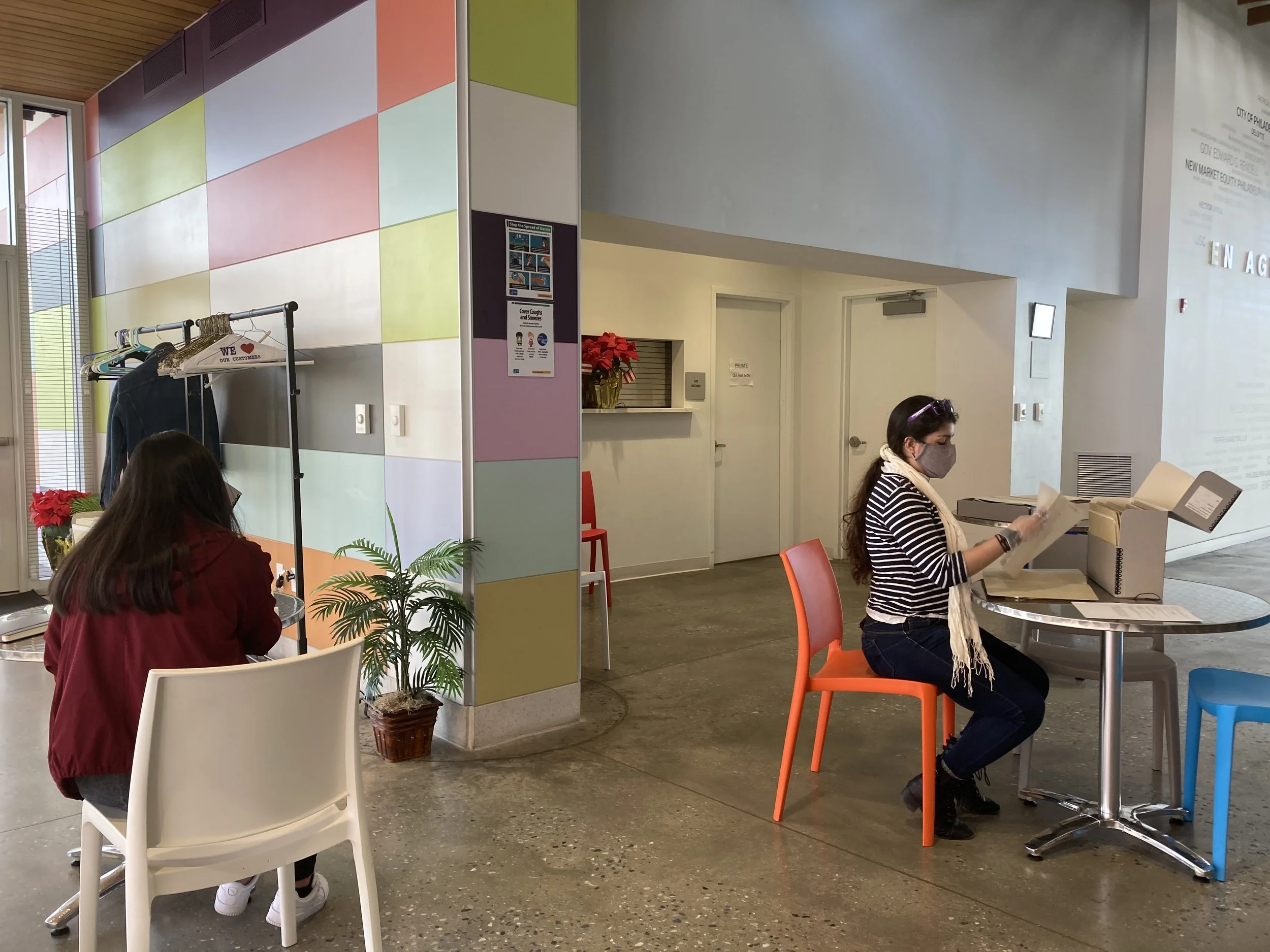
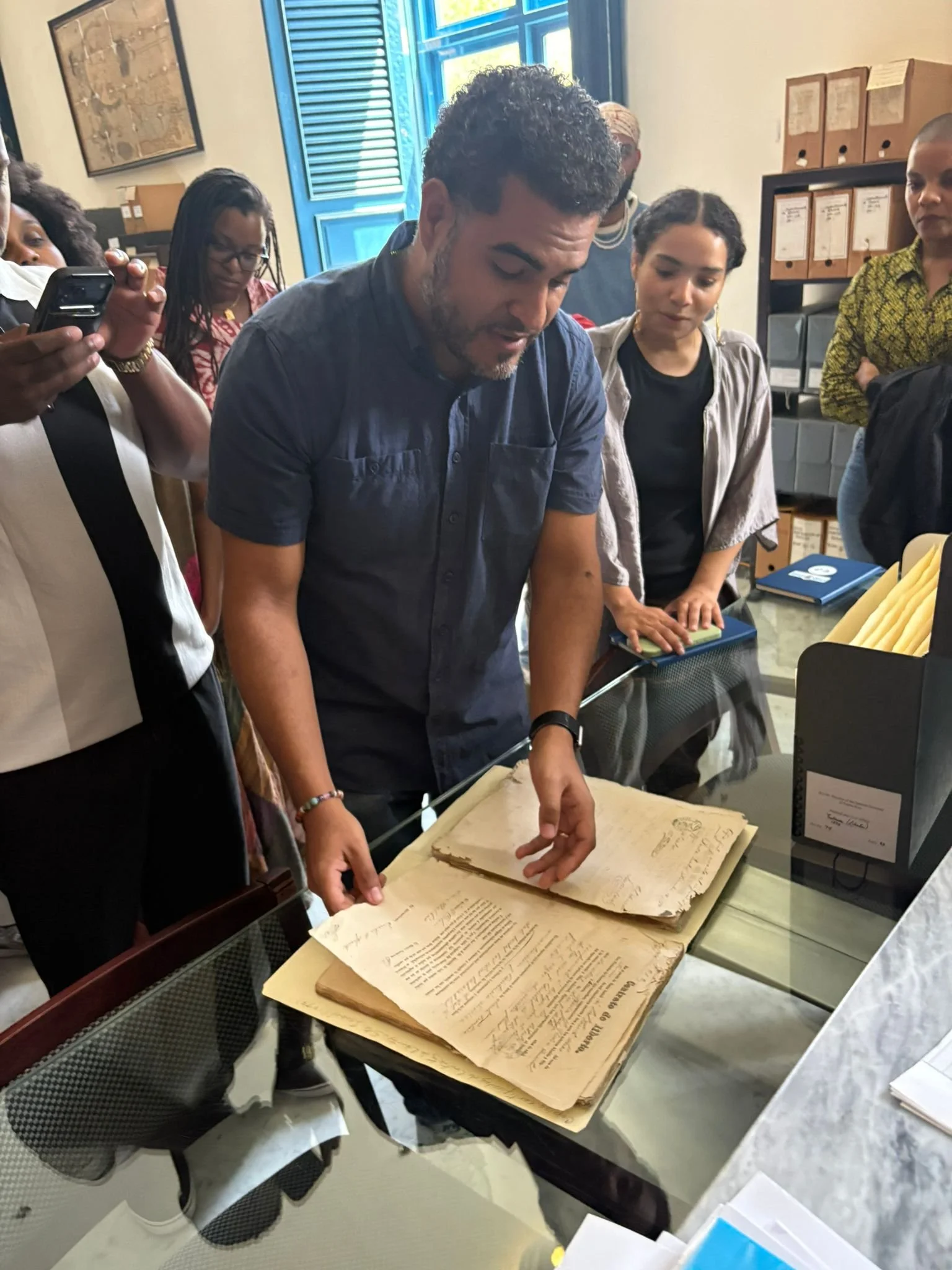
Since then, I’ve been hooked, and have taught original courses at the university and secondary levels that engage students as thought partners in making sense of the world around them. In that vein, my approach as an educator is interdisciplinary, in that I introduce complementary frameworks that support students’ meaning-making; multimodal, by incorporating multiple entry points that recognize the range of students’ learning styles; and methods-forward, because hands-on methods training - from oral history interviews and ethnographic fieldwork to archival research - provides new avenues to ask and answer learners’ pressing questions.
What my students say:
“…One of the biggest things that stood out to me was learning about archives and archival work. Before this experience, I never realized just how much work goes into preserving history or how important old documents, photographs, recordings, and personal stories are in helping us understand the past. It was honestly eye-opening to see how all of those pieces come together to tell a community’s story.” (Spanish Paleography and Archival Methods/Taller Entre Aguas Field School, Summer 2026)
“This was a great course! It gave me the opportunity to research something I have always wanted to know about my country’s history that I wouldn’t have been able to do in my major. I’ve been able to teach what I learned to my family, too.” (Race in Latin America and its Diasporas/University of Pennsylvania, Summer 2022)
“[Professor Morales-Armstrong] pushed us to think critically through the subjects we learned. It was evident that he thought through each component of the class, from the selected readings to the questions he would pose to us weekly. I appreciated having such a thoughtful professor, which in turn made us thoughtful as well.“ (The Inclusive City: Participatory Design at Taller Puertorriqueño/University of Pennsylvania, Spring 2021)
“Professor Morales–Armstrong is one of the most informative, professional, and thought–provoking teachers that I've ever had. I really appreciated how honest he was when informing us about the true history of Latin America. He didn't shy away from difficult topics in his lectures and that made the class even better.“ (Race in Latin America/Rutgers-Camden, Fall 2021)
“Professor Morales-Armstrong[’s…] class was very insightful. I also really appreciated that he wanted us to learn career skills as well. He genuinely cares about his students and the subject he's lecturing.“ (Race in Latin America/Rutgers-Camden, Fall 2021)
[After working with primary sources at the Archivo General de Puerto Rico]: “I didn’t know what a historian did until today. But now, I know I can do that, and I think I want to major in history.” (Afro-Latin American Youth Research Expedition/Puerto Rico, Spring 2019)
During class, “we buil[t] background knowledge about Peru, specifically the Afro-Peruvian community in Peru. We read articles, interviewed Afro-Peruvian people, tried Peruvian food… [As part of the class], I have also been able to dive into my Afro-Dominican identity and learn about the legacy of the African diaspora in Latin America.“ (AfroLatinidad and Diaspora/Perú, Spring 2018)
Selected Courses:
University:
“Afro-Latinx History and Culture.” (Undergraduate seminar in Social and Cultural Analysis), New York University, Spring 2027.
“Race in Latin America and its Diasporas.” (Graduate seminar in Latin American/Latinx Studies and Africana Studies), University of Pennsylvania, Summer 2022)
“Race in Latin America.” (Undergraduate course in Sociology, Anthropology, and Criminal Justice), Rutgers University-Camden Campus, Fall 2021.
“The Inclusive City: Participatory Design at Taller Puertorriqueño.” (Undergraduate seminar in History, Latin American/Latinx Studies, Africana Studies, and Urban Studies), University of Pennsylvania, Spring 2021.
University (Syllabi Prepared):
“Archival Research and Historical Writing.” (Graduate or upper level undergraduate seminar).
“StoryMapping Fragments in the Archives of Slavery.” (Upper level archival and digital humanities methods seminar), developed as a 2025 Digital Ethnic Futures Consortium Teaching Fellow.
“Slavery, Freedom, and Resistance.” (Intermediate undergraduate course).
“African Diaspora Religions in the Americas.” (Intermediate undergraduate course).
Other: Adult Learners; Secondary Level:
“Spanish Paleography and Archival Research Methods.” (Adult learners, San Juan, Puerto Rico/Archivo General de Puerto Rico), Taller Entre Aguas Field School, Summer 2026 (2027, 2028).
“Graduate Application Writing and Editing (Humanities).” (Intensive one-on-one coaching x four adult learners), Fall 2021 (Institute for the Recruitment of Teachers), Fall 2025 (independent).
“AfroLatinidad and Diaspora.” (History and Spanish course, New York City Department of Education), WHEELS High School, Spring 2017 (focus: Cuba), Spring 2018 (focus: Peru).
“Introduction to Afro-Cuban History and International Relations.” (History course, New York City Department of Education), WHEELS High School, Spring 2016.
“Multiculturalism in the Arab World (Morocco).” (Study abroad program for college freshmen and high school seniors, multiple cities in Morocco), Experiment in International Living (EIL), Summer 2015.
“Conversational English (Advanced)”; “Intermediate English.”; “GRE Exam Preparation”; “SAT Exam Preparation.” (English as a Second Language course), AMIDEAST Rabat (Morocco), Fall and Spring 2015.
“Youth Leadership Then (Civil Rights/1960s) and Now.” The Bronx Institute at Lehman College-CUNY, Summer 2009.
“The ‘Reel’ Bronx: Media Literacy.” The Bronx Institute at Lehman College-CUNY, Summer 2007.